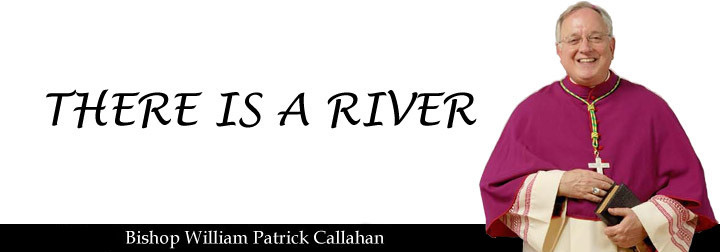
IMMACULATE MARY
8 December 2011
In Rome, there
is a beautiful section called the Piazza di
Spagna. It is the sight of the Spanish Embassy,
the Spanish Steps, the Fountain of the Old Boat,
and the magnificent monument dedicated to the
Immaculate Conception of the Blessed Virgin
Mary. Every year, on the 8th of December, the
monument is festooned with flowers and the
piazza is jammed with people trying to catch a
glimpse of the pope as he makes his annual
pilgrimage to the monument to place his flowers
and to pray to the Mother of God with the
citizens of Rome and the world.
Last year the
Holy Father reminded the gathered people that
the most beautiful gift we can offer the Mother
of God is our prayer, “the prayers we carry in
our hearts and entrust to her intercession. They
are invocations of thanksgiving and petition:
thanksgiving for the gift of faith and for all
the good we receive from God; and petition for
the various needs, for the family, for health
and for work, for every difficulty that life
makes us encounter.”
Mary was
immaculately conceived. That means that from the
time of her conception in the womb of her mother
St. Anne, Mary was preserved from sin; even
original sin did not touch her soul. This fact
was commonly held in one way or another, from
the earliest days of both the Western and
Eastern Churches. It was, however, hotly debated
and contested in the Middle Ages.
The champions
on each side were the Franciscans who held it
was true, and the Dominicans who held it was
not. The leader of the Dominicans was none other
than St. Thomas Aquinas, himself, who held that
the idea could not be maintained because Jesus
Christ came to free all creatures from sin. Mary
was a creature; therefore she had to have sin
and was in need of the Redeemer.
The leader on
the Franciscan side, was the quiet and
unassuming, John duns Scotus, an intellectual of
profound piety and devotion. He taught that Mary
was indeed a creature, but that she was held by
the particular and unique favor of the Father to
be the Mother of the Redeemer. She, therefore,
was the first to experience the fruits of the
Redemption, by God’s favor and the work of the
Son of God who suffered and died for the
salvation of all people.
His Holiness,
Pope Pius IX, thus defined the dogma of the
Immaculate Conception as a matter of faith for
Catholics on Dec. 8, 1854 with these words:
“We declare,
pronounce, and define that the doctrine which
holds that the most Blessed Virgin Mary, in the
first instance of her conception, by a singular
grace and privilege granted by Almighty God, in
view of the merits of Jesus Christ, the Savior
of the human race, was preserved free from all
stain of original sin, is a doctrine revealed by
God and therefore to be believed firmly and
constantly by all the faithful,” (“Ineffabilis
Deus” #27).
Pope Benedict
XVI in his remarks last year at the Roman
monument further reminded the people in
attendance and those throughout the world to
“listen to what Mary says as she speaks to us of
the Word of God who was made flesh in her womb.”
“Mary,” the pope teaches, “reminds us that we
are called to open ourselves to the action of
the Holy Spirit in order, in our ultimate
destiny, to attain an immaculate state, fully
and definitively free from evil.”
“Mary’s gaze
is God’s gaze upon each one of us,” says the
Vicar of Christ. “She looks at us with the
Father’s love itself and blesses us. She acts as
our ‘advocate’ and we invoke her thus in the
Salve, Regina: Advocata nostra. Even if everyone
were to speak badly of us, she, the Mother,
would speak well of us because her Immaculate
Heart is in tune with God’s mercy. So it is that
she sees the City [Rome and the world]: not as
an anonymous agglomeration but as a
constellation in which God knows each one
personally by name, one by one, and calls us to
shine with his light. And those who in the
world’s eyes are the first, to God are the
lowliest; those who are little to God are
great.”
Today is the
Solemnity of the Immaculate Conception. It is
under this title that we Americans invoke Our
Lady as Patroness of our beloved country. The
national shrine in Washington, D.C., is a
monument to decades of love for the Mother of
God and her special protection for the United
States. She speaks to us in Pope Benedict’s
words: “be holy like our Father, be immaculate
like our Brother Jesus Christ, be loved
children, all adopted in order to form a great
family with no boundaries of color or language,
because God, Father of every human being, is
one.”
O, Mary,
conceived without sin, pray for us who have
recourse to thee!
…and I’ll see
you at Sunday Mass!
|
|
THERE IS A RIVER
2 December 2011
Advent, the spiritual writers and
teachers remind us, is a great season of
preparation for the coming of Christ. St.
Bernard of Clairvaux writes about the three
comings of Christ. This is, of course, one of
the mainstays of Advent spiritual reading, so it
does offer us a bit of promise in these days.
The mysterious and mystical ways of God are
always unknown to us and surprising when they
come to our consciousness. God’s ways are not
our ways and it is, therefore, necessary to
ponder – as the Blessed Mother did – to ponder
them in our hearts.
The first coming,
of course, involves the Blessed Mother
intimately. She bears in her body the Second
Person of the Blessed Trinity. Mother Mary
provides His human body through the great
mystery of the Incarnation. In a few days we
will celebrate her Immaculate Conception (Dec.
8), the divine privilege of being conceived in
the womb of her mother, St. Anne, without
original sin; the first human being to
participate in the fullness of life that would
come from her Divine Son’s Paschal Mystery.
That first coming is the essence
of our Christmas celebration. The Word made
Flesh is visible for all the world, all the
ages, and all human history to see, study,
evaluate, and emulate.
The third coming
will likewise be a visible encounter. Jesus will
come again at the end of time as the judge of
all creation. It is He who has redeemed it and
it is He who will separate the good from the
evil, presenting the good and all redeemed
creation to His Father, and pronouncing in turn,
the sentence of damnation for those who have
chosen it.
These two comings of Christ are
clear and visible. There will be no mistaking
His presence. The second coming of the
three is a bit more mystical and faith-filled.
The second coming is the presence of Christ who
“with us,” the One who is with us “until the end
of time.” (Matthew 28:20)
The spiritual presence of the
Risen Christ in our midst, especially in the
Most Blessed Sacrament, is certainly a mystery
and a reality that requires our daily attention.
This “second coming” reveals Jesus as the
Companion along the journey between two points:
the first, His coming as the Savior in our flesh
at Christmas, the second, His coming again in
glory at the end of time.
The three comings of Christ focus
our attention on the life of grace and the
sublime attentiveness of God for His creation.
St. Paul reminds us that we walk by faith and
not by sight. (2 Corinthians 5:7) The
gift of grace illuminates our hearts and souls.
The sound teaching of Jesus, especially
concerning our care and service for our brothers
and sisters, (Matthew 25: 31ff.) guides
our way along the journey of life. We do not
walk alone, but Jesus, Who is with us in and
through His Church, provides the sacramental and
spiritual structure that gives meaning to the
daily aspects of human life.
During the season of Advent, all
channels of human knowledge and understanding,
human emotion and sentiment, about God come to a
glorious nexus that allows for the mind and
heart to contemplate all three comings of Christ
in one single liturgical season. The
omnipresence of God can be savored and explored
so as to build up our genuine awareness of God’s
creation and continued sanctification of the
human race.
We say, with Scripture, “Come,
Lord, Jesus!” We say this with certainty of
faith, knowing that He has come in history. We
say this with certainty of faith, knowing that
He is with us, in and through His Church,
inspiring true faith, hope and love. We say this
with certainty of faith, knowing that Christ
will come again in glory at the end of time.
“The Spirit and the bride say,
‘Come.’ And let everyone who hears say, ‘Come.’
The one who testifies to these things says,
‘Surely I am coming soon.’ Amen. Come, Lord
Jesus”!
(Revelation 22: 17, 20)
In the meantime, I’ll see you at
Sunday Mass |